
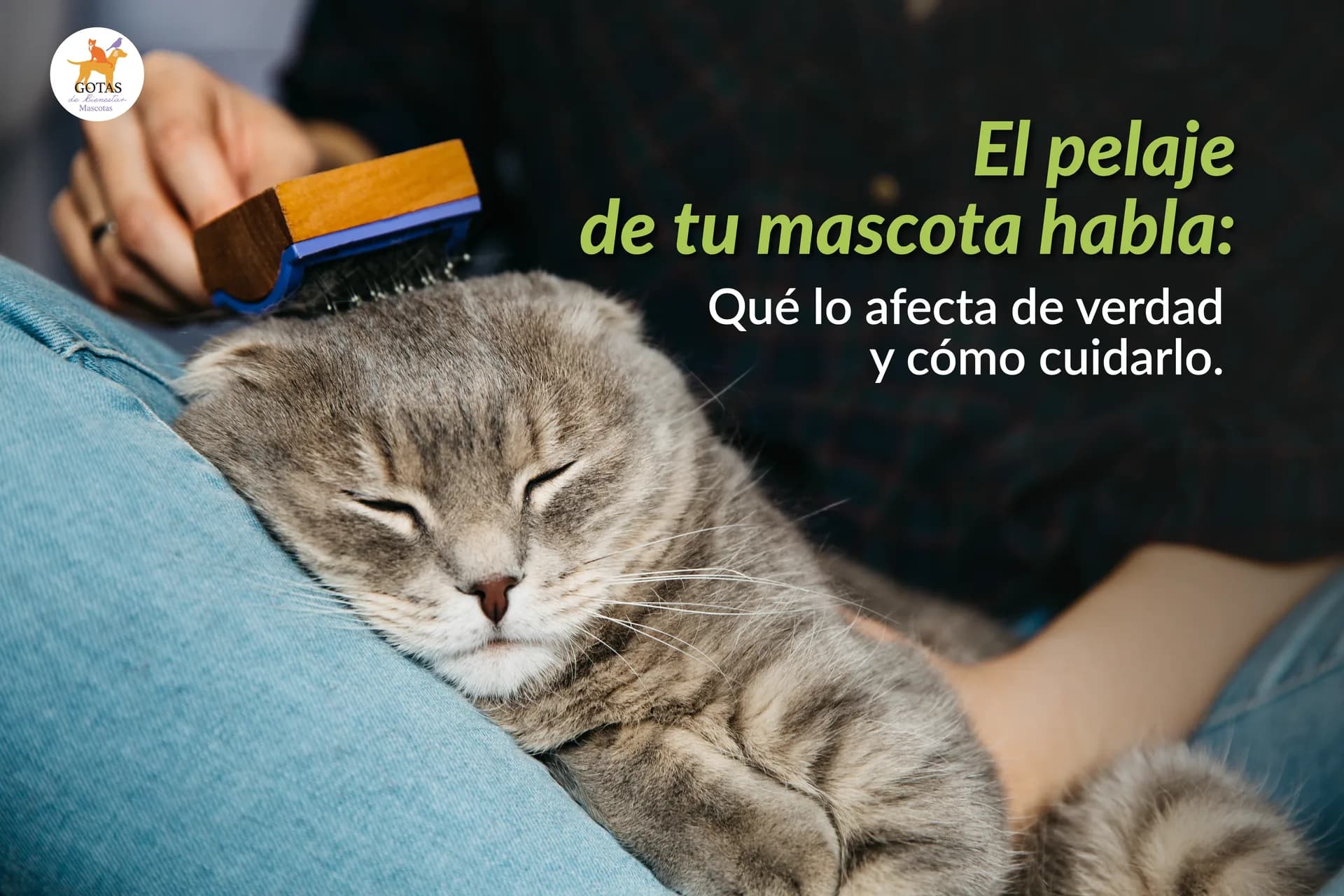
When a pet’s coat looks dull, dry or sheds more than usual, the first thing almost all of us do is change the shampoo.
And it’s almost never the shampoo.
The coat is one of the most visible parts of an animal’s body, which is why it works as a kind of thermometer: it reflects how it eats, how it is bathed, whether it has parasites, how it sleeps and —yes— also how it feels. It’s worth looking at the whole picture before buying a new product.
1. Diet comes first. By far.
Hair is made mainly of protein. If the diet doesn’t provide good-quality protein and the right fats, the body prioritizes: first the organs, then the skin and coat. That’s why a poor diet shows in the shine before anywhere else.
Omega 3 and omega 6 fatty acids play an important role in skin health and coat quality. But before adding oils or supplements on your own, it’s best to ask your vet: the amount and type depend on each animal’s weight, age and condition, and too much also has consequences.
If you are going to change food, do it gradually, mixing the new food with the old one over several days.
2. Brushing does more than it seems
Brushing isn’t just about looks. When you brush:
- you remove dead hair, which, if left, forms tangles and keeps the skin from breathing;
- you spread the natural oil the skin produces along the hair, and that oil is what gives it shine;
- you stimulate circulation in the skin;
- and, above all, you check the body. You find ticks, lumps, wounds or sensitive areas long before they become a problem.
How often depends on the type of coat. Long or double coats need brushing almost daily; for short coats, two or three times a week is enough. And the brush matters: one that isn’t right for the coat type can hurt the skin.
With cats, brushing has an extra benefit: the less hair they swallow while grooming, the fewer hairballs.
3. Bathing too often also does harm
This is probably the most common mistake, and it comes from a good place: we want our pet to smell nice.
The problem is that every bath washes away the layer of natural oil that protects the skin. Bathing too often dries it out, and dry skin means a dull coat, as well as itching.
There is no universal number —it depends on the breed, the type of coat, whether it goes outside a lot and what your vet recommends—, but as a general reference, most healthy dogs don’t need a weekly bath. Spacing baths out usually improves the coat more than any product.
Cats, under normal conditions, groom themselves and don’t need routine baths.
4. Human soap doesn’t work. Seriously.
It isn’t a marketing myth: dogs’ skin has a different pH from human skin, closer to neutral, while ours is more acidic. A shampoo formulated for us disrupts that barrier and can leave the skin irritated and dry.
Use a shampoo formulated for the species and, if your pet has sensitive skin or a skin condition, the one your vet recommends.
And a detail that often gets overlooked: rinse more than you think you need to. Shampoo left in the coat is a common cause of itching.
5. External parasites
Fleas, ticks and mites affect the skin directly, and in some animals the reaction to flea bites triggers intense itching and hair loss from scratching.
A parasite-control plan shouldn’t be improvised or copied from the neighbor: your vet defines it according to where you live, your pet’s age and its weight.
6. Emotional state counts too
An animal living under ongoing tension —a move, a new member of the household, constant noise, little rest— can show it in its coat. In cats it’s especially visible, because many respond to stress by over-grooming, to the point of leaving thin or bald patches.
It’s one more piece of the puzzle, not the explanation for everything. But looking at what has changed at home in recent months often gives clues.
When care becomes a reason to see the vet
Some signs can’t be solved with a brush or a diet. Take your pet to the vet if you notice:
- hairless or bald patches, especially if they are symmetrical;
- intense itching or itching that won’t stop;
- red skin, with scabs, spots or wounds from scratching;
- heavy dandruff or very greasy skin;
- a bad smell that doesn’t go away with bathing;
- sudden, massive hair loss, outside seasonal shedding;
- a change in the color or texture of the coat in a short time.
Several health conditions show up first in the skin and coat. Diagnosing them requires a professional examination and, in some cases, lab tests. No care product —including any of ours— replaces that step.
Where flower essences come in
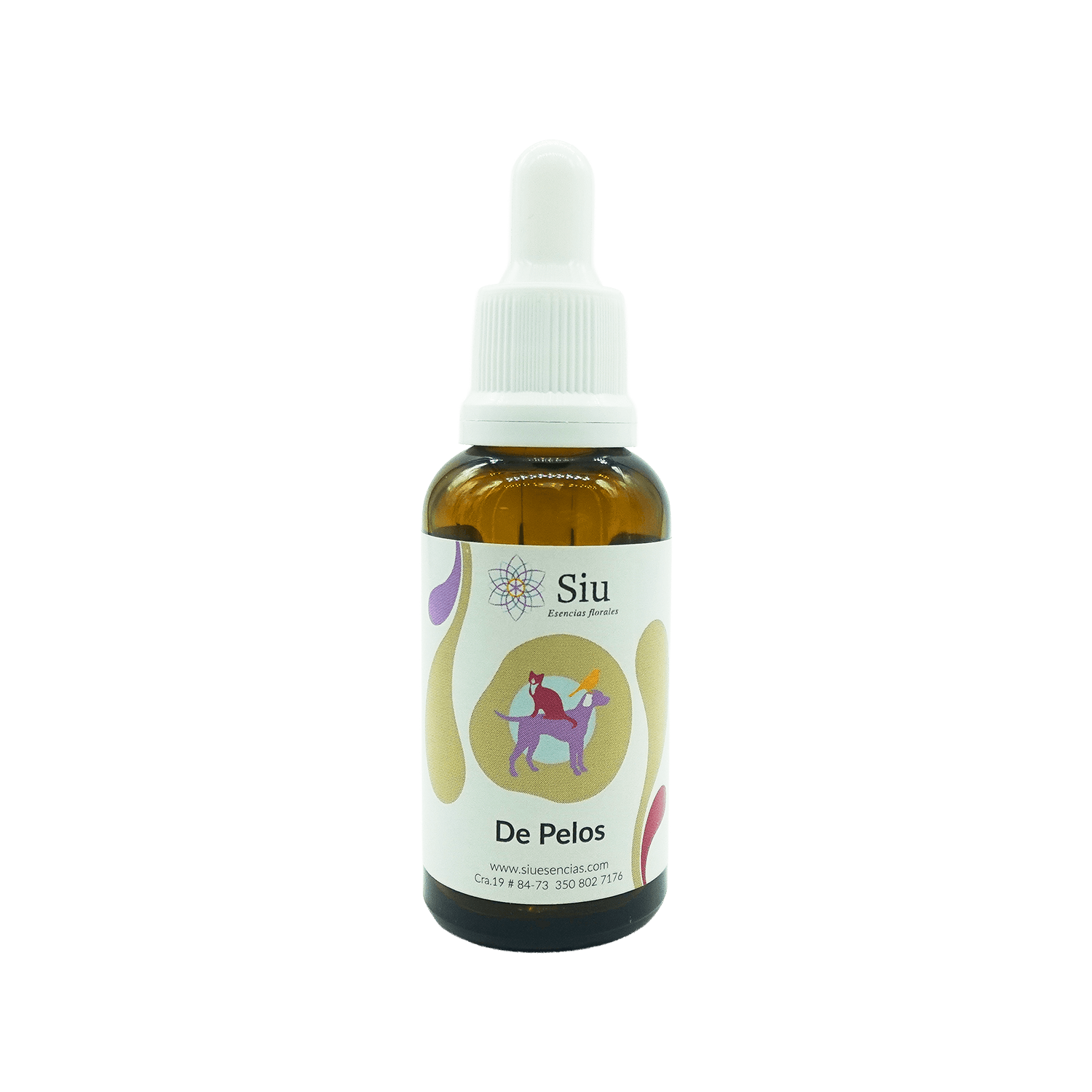
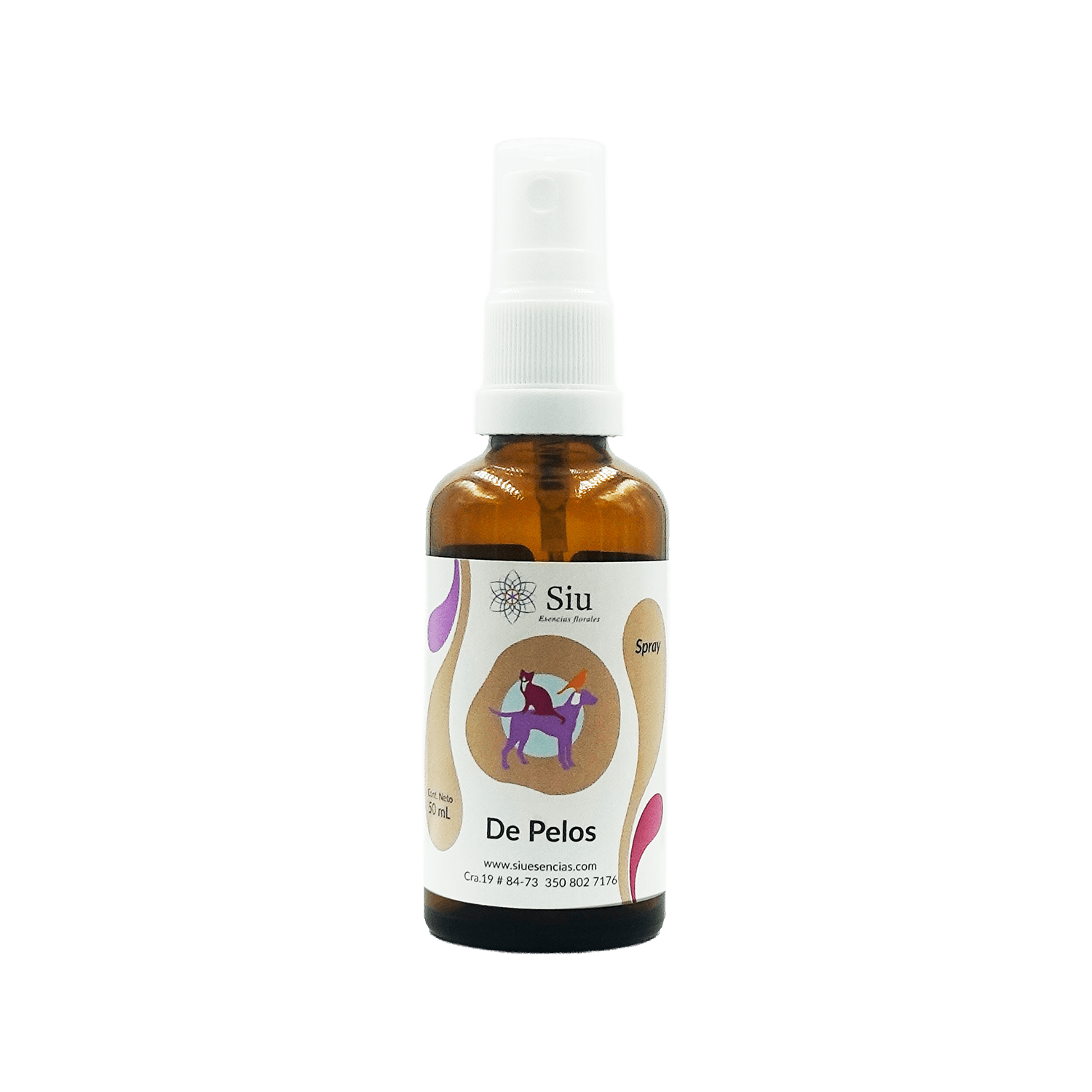
At Mascotas Siu we make De Pelos, a floral blend designed to accompany your pet’s coat-care routine from the angle of its wellbeing. It comes in a 30 mL dropper bottle —four drops directly in its mouth, two to three times a day, or one drop on its favorite biscuit or snack— and in a 50 mL spray to mist into the room.
We’ll say it plainly: De Pelos doesn’t make hair grow, doesn’t stop hair loss and doesn’t solve a skin problem. It’s a wellbeing complement that accompanies a routine in which the decisive factors are still diet, brushing, the right bathing frequency, parasite control and veterinary check-ups.
It doesn’t cure or treat illnesses and doesn’t replace the veterinarian. If your pet has a health condition or is on medication, check with your vet first.
What to take away
A beautiful coat is almost never the result of a single product. It’s the result of the whole picture: it eats well, it’s brushed often, it isn’t over-bathed, the right soap is used, it’s dewormed and it lives calmly.
If you’re going through that list and something is off, that’s where the answer is, before you look on the shelf.
Mascotas Siu flower essences are a wellbeing complement. They do not cure or treat illnesses, nor do they replace the veterinarian. If you notice hair loss, itching or any change in the skin, consult a professional.
Related products
To accompany the coat-care routine, De Pelos in a 30 mL dropper bottle and De Pelos in a 50 mL spray.