

The importance of nutrition has become so relevant nowadays that we're even extending it to our furry companions, understanding that it's a fundamental part of their wellbeing. That's why changes in our furry friends' appetite can be an indicator of illness or of changes in their physical or emotional state.
Generally, loss of appetite is mainly associated with a physical illness involving pain or inflammation; for example, it's common in patients with dental problems — a frequent condition in cats — or in cases of generalized pain, and often in situations of gastrointestinal discomfort, causing the animal to refuse food. Likewise, loss of appetite can be associated with infections, side effects of medications or vaccines, post-surgical recovery processes, liver or kidney disease, or even cancer. That's why we should always consult the veterinarian and first rule out that the lack of appetite isn't due to a medical condition. It's essential to consider that if the loss of appetite occurs alongside other symptoms such as diarrhea, vomiting, weakness, or lethargy, among others, our pet should be evaluated by a veterinary professional, and in the case of cats, loss of appetite for more than 24 hours is considered a veterinary emergency and should be addressed as soon as possible.
Along the same lines, it's essential to consider factors directly related to feeding, for example: sudden diet changes and the resulting rejection of the new food, boredom with the usual food, a preference for soft-textured food, and even aspects of the environment such as an unsuitable place to eat — for example, very noisy spaces, the presence of other animals, or the lack of an established routine; even a lack of physical and mental activity (enrichment) influences our furry companions' appetite.
On the other hand, there are emotional and/or behavioral causes that can also lead to loss of appetite. Factors such as stress, anxiety, depression, or grief affect our pets' appetite. Situations such as changes in the environment, moves, trips, loud noises, the absence of their guardians, or the loss of a companion — whether human or animal — can trigger these states, especially in animals that are strongly attached to their emotional bonds.
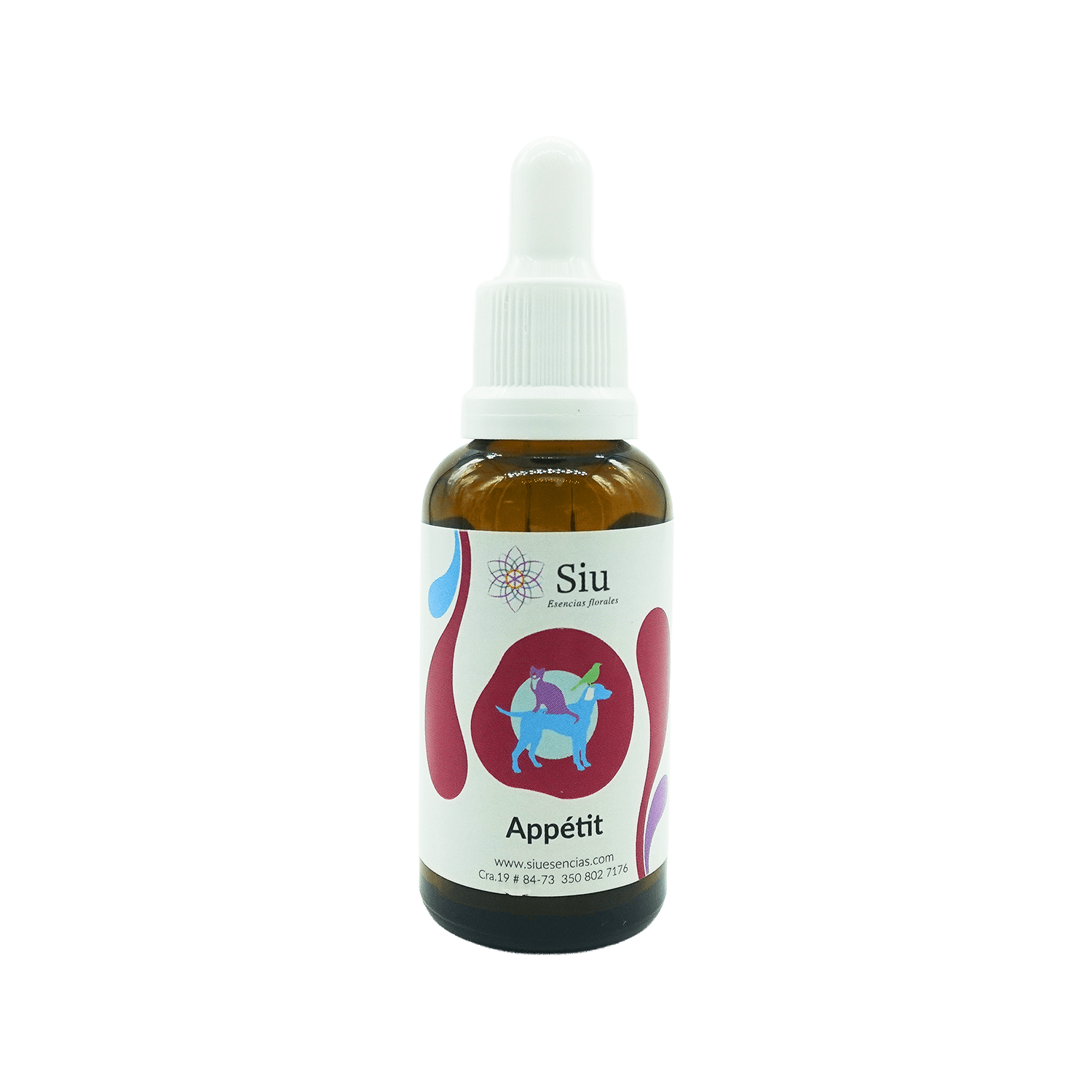
In most cases, we can encourage our pets' appetite using natural alternatives. However, before putting them into practice, it's essential to rule out any physical illness that could compromise our pets' wellbeing, and it's also important to reconsider the animal's emotional state. In this sense, the use of flower essences can be a complementary tool to balance their emotions and encourage a better disposition toward eating. For example, the Siu Appétit flower blend supports the motivation to eat and the sensation of hunger, or increases the desire to eat in your furry friend.
Likewise, we can use strategies like warming the food slightly, or adding natural broth (chicken or beef) without salt, which can improve the flavor and spark interest in the food. We can also include safe fresh foods, such as small pieces of cooked chicken, grated carrot, or a bit of plain Greek yogurt (without sugar or sweeteners). Alternating textures between wet, dry, or semi-moist food can spark interest, especially in cats. Using interactive feeders or scent games turns mealtime into a fun experience that can motivate eating.